Why AI Gives Bad Answers and the 6 Checks Every Business Owner Should Use
AI can draft quickly; it cannot be your final fact-checker.
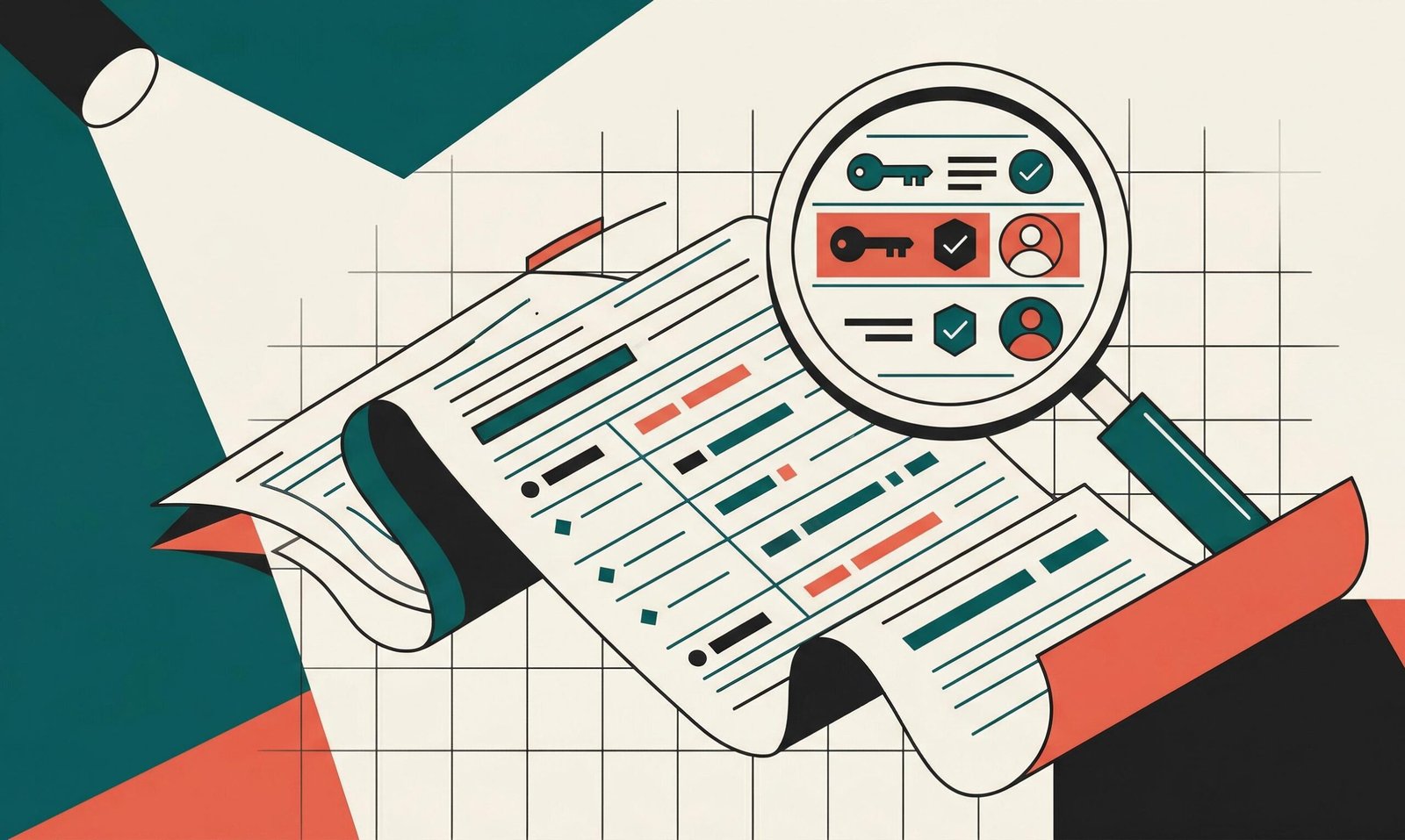
Imagine asking an AI assistant to write a promotional email for your business. Within seconds, it produces a polished message with an attractive offer, clear benefits, and a professional tone.
You review the writing, make a small change, and prepare to send it. But there is a problem. The AI has included a discount your business never approved, a product feature you do not offer, or a delivery promise your team cannot meet.
The message sounds convincing. That does not make it correct. For small business owners, the real challenge is not getting AI to produce content. It is knowing which parts of that content can be trusted.
CONFIDENT WORDS.
UNVERIFIED FACTS.
A polished AI response is not always an accurate one.
A polished answer can still be wrong
Artificial intelligence can help business owners write emails, summarize documents, prepare marketing content, research topics, and organize information.
These tasks can save valuable effort. But using AI also introduces a responsibility: checking its answers before they influence business decisions or reach customers.
An AI-generated article might contain an inaccurate statistic. A customer service response might promise a refund outside your actual policy. A proposal might include an incorrect total.
These are not always obvious mistakes. Some of the most dangerous errors appear inside otherwise useful, well-written responses.
AI confidence is not proof of accuracy.
What are AI hallucinations in business?
An AI hallucination occurs when an AI system produces information that appears believable but is false, invented, or unsupported.
For a small business, this could mean a fabricated industry statistic, a nonexistent source, an incorrect product specification, or an invented statement about a company.
For example, you might ask, "What are the latest customer preferences in my industry?" The AI may provide a detailed summary with percentages, trends, and references. Some claims may be valid, while others may be outdated or impossible to verify.
AI hallucinations for business matter because an incorrect answer can move beyond a private chat into a public website, sales proposal, customer interaction, or internal decision.
Not every AI mistake is technically a hallucination. Misunderstood instructions, outdated information, incorrect calculations, and missing context can also produce bad outputs. The practical lesson is the same: important claims need checking.
Why does AI sometimes give bad answers?
1. AI predicts useful-looking responses, not guaranteed truths
Language models generate responses using patterns learned during training and information available through their tools or supplied context. They can produce fluent explanations, but fluency is different from verification.
2. AI may not have current information
Prices change. Policies are revised. Competitors launch products. An AI assistant without current, reliable information may answer using older knowledge or unsupported assumptions. Even web-connected systems can retrieve incomplete or outdated information.
3. Vague questions encourage assumptions
Ask AI to "create a special offer" without specifying the price, eligibility, or terms, and it may invent plausible details. That can be useful for brainstorming, but dangerous when those details are mistaken for approved information.
4. AI can misunderstand business context
Every business has unique pricing rules, operating procedures, service limitations, and customer expectations. AI does not automatically know those details.
5. Sources and calculations can look more reliable than they are
Numbers, formulas, publication names, and links can create an impression of credibility. They still need checking against independent evidence.
The 6 checks every business owner should use
You do not need to become a technical AI expert to reduce common mistakes. Use these six checks before publishing content, preparing proposals, making decisions, or sending customer-facing messages.
Verify factual claims
Ask: Is this statement actually true?
AI-generated marketing content often contains claims about products, industries, customers, and competitors. Some are easy to verify. Others require research.
Imagine AI writes: "Our software works with every major accounting platform." Unless your business has confirmed those integrations, the claim may be inaccurate.
Pay attention to product features, industry statistics, competitor comparisons, dates, names, and performance claims.
Ask yourself: Could I show a customer reliable evidence for this statement?
Recalculate every important number
Ask: Do the numbers add up?
AI can help explain budgets, invoices, and discounts, but generated calculations should not be accepted automatically.
Suppose a product costs ₹2,000 and you want to offer a 15% discount.
Discount: ₹2,000 × 15% = ₹300
Final price: ₹2,000 − ₹300 = ₹1,700
Verify discounts, taxes, subtotals, profit margins, forecasts, and percentage changes. Also check the assumptions behind the figures.
Verify citations and sources
Ask: Does the source exist and support the claim?
An AI assistant may mention a convincing report, article, or organization that does not support the statement being made.
Before publishing an AI-generated statistic, open the original source, check its author, verify the publication date, locate the relevant data, and understand its context.
Even a genuine source may refer to a different country, industry, sample, or time period.
Review legal, policy, and compliance claims
Ask: Is this allowed under the actual rules?
Suppose an AI assistant drafts a return policy that allows returns within 30 days. Your approved policy may differ, and applicable laws may impose additional requirements.
Check refund policies, warranties, privacy terms, advertising claims, contracts, taxes, and regulatory statements against current official rules.
Obtain qualified professional review for legal, tax, or regulated matters when necessary.
Confirm pricing and commercial details
Ask: Is this information correct today?
AI may generate an outdated price, expired promotion, unavailable product, or unsupported delivery estimate.
For example, a draft might advertise a service for ₹999 with free installation when the actual price is ₹1,499 and installation costs extra.
Check current prices, discounts, inventory, eligibility conditions, delivery timelines, and extra charges.
Review customer-facing statements
Ask: Would I stand behind this promise?
An AI assistant may draft a friendly response promising a project will be completed by Friday without checking your team's workload.
Review emails, chatbot replies, landing pages, proposals, advertisements, and support messages for unsupported guarantees or misleading claims.
Consider what customers could reasonably expect after reading the message. If that expectation exceeds what your business can deliver, revise it.
A simple AI verification checklist
Use this quick reference before important AI-generated content is published or sent.
| Check | Verify | Source of truth |
|---|---|---|
| 1. Facts | Features, claims, dates | Official documentation |
| 2. Calculations | Totals, taxes, discounts | Calculator or spreadsheet |
| 3. Citations | Sources and statistics | Original publications |
| 4. Policies | Legal and policy wording | Approved rules and policies |
| 5. Pricing | Offers and commercial terms | Current business records |
| 6. Messages | Customer promises | Authorized staff and records |
Give more attention to claims that can affect money, legal obligations, customer trust, or important decisions. A brainstorming idea needs less scrutiny than a live quotation or public product claim.
How to get more reliable answers from AI
Provide accurate business context
Instead of saying "Write a promotional email," specify the actual price, offer duration, eligible customers, and approved benefits. Tell AI not to invent missing details.
Ask AI to identify uncertainty
Use an instruction like: "If information is missing, identify what needs confirmation. Do not guess." This may reduce unsupported assumptions, but it does not guarantee accuracy.
Separate drafting from checking
Ask AI to prepare a draft, then identify every claim, number, source, policy, price, or customer promise needing independent verification. Use that list to guide your review.
Remember that AI reviewing its own answer may miss its original mistakes.
Keep approved information accessible
Maintain a current reference document containing product details, prices, policies, services, and approved claims. Share only information that is appropriate and authorized for your AI tool.
Common mistakes business owners should avoid
- Trusting professional language: Clear writing does not guarantee correct information.
- Accepting source links blindly: Verify the original evidence.
- Allowing AI to invent missing details: Confirm prices, policies, and deadlines.
- Publishing without review: Assign responsibility for approval.
- Assuming future answers will be accurate: Each task can introduce different risks.
Frequently asked questions
Can AI hallucinations be completely prevented?
No method guarantees that generative AI will never produce a false or unsupported response. Clear instructions and independent verification can help reduce risks.
Is ChatGPT always accurate when it provides sources?
No. Links may be outdated, unrelated, or incorrect. Open the original source and check the evidence.
Should small businesses use AI for customer service?
AI can assist with drafting and organizing replies. Sensitive cases involving refunds, complaints, payments, and contractual commitments need appropriate controls and review.
What is the easiest way to fact-check AI content?
Identify factual claims, numbers, citations, policies, prices, and promises. Check important items against independent evidence or approved records.
Can one AI tool fact-check another?
It can help identify possible problems, but agreement between AI tools is not proof. Important claims still require independent verification.
Let AI draft. Verify before you publish.
AI can be useful for writing, research, analysis, and customer communication. But useful does not mean automatically reliable.
Check six things: Facts, calculations, citations, policies, pricing, and customer-facing statements.
Make verification part of your normal workflow, especially when content can affect customers, money, legal responsibilities, or your reputation.
Your next step: Save this article's checklist and use it before your next AI-generated advertisement, proposal, or customer message.
Review the 6-Check Checklist